







Cube Dx
Product Description
The Cube Dx Multiplex Diagnostic Platform Direct- from-Sample Pathogen Identification & Resistance Profiling
Overcoming the Culture Bottleneck in Critical Infections
In the management of severe blood stream and respiratory infections, traditional diagnostic methods are fundamentally limited by time. Conventional blood cultures require a median of 48 hours to isolate and identify the causing pathogen, creating a dangerous diagnostic gap. Because patient survival rates drop significantly with every hour that targeted antimicrobial therapy is delayed, laboratories and clinical teams require an alternative to overnight incubation.
The Cube Dx platform redefines this workflow by combining ultra-sensitive target amplification with a unique compact sequencing microarray technology.
hybCell technoclogy
hybcell enables both challenging immunologic (protein) as well as comprehensive genetic (DNA) tests on one platform. Fundamental to the quality of any test is molecular interaction under defined and reproducible phys-ical and chemical conditions. The hybcell technology provides fast results with reduced hands-on time which results in quicker diagnosis and direct patient benefit.
Microarrays are an established core technology within the R&D community and are a very powerful method for the detection of molecular interactions. In principle, certain detector molecules, such as antibodies or DNA Oligos are immobilised on a surface, which can either be a simple glass slide or a proprietary chemical or biological coating. The detector molecules bind certain compounds in the test sample and a biological readout is made which detects this interaction. A core component of all microarray systems is software packages which are able to interpret the large amount of data which can be generated in parallel by the large number of spots included in current microarrays.
The hybcell is the world’s first cylindrical microarrays. Advantages of the hybcell are a very reproducible and fast process which is easy to use, as the hyborg processes the samples automatically. As opposed to carrying out the incubation and reaction between analytes and detector molecules in a standard two-dimensional format, the hybcell is made up of following components:
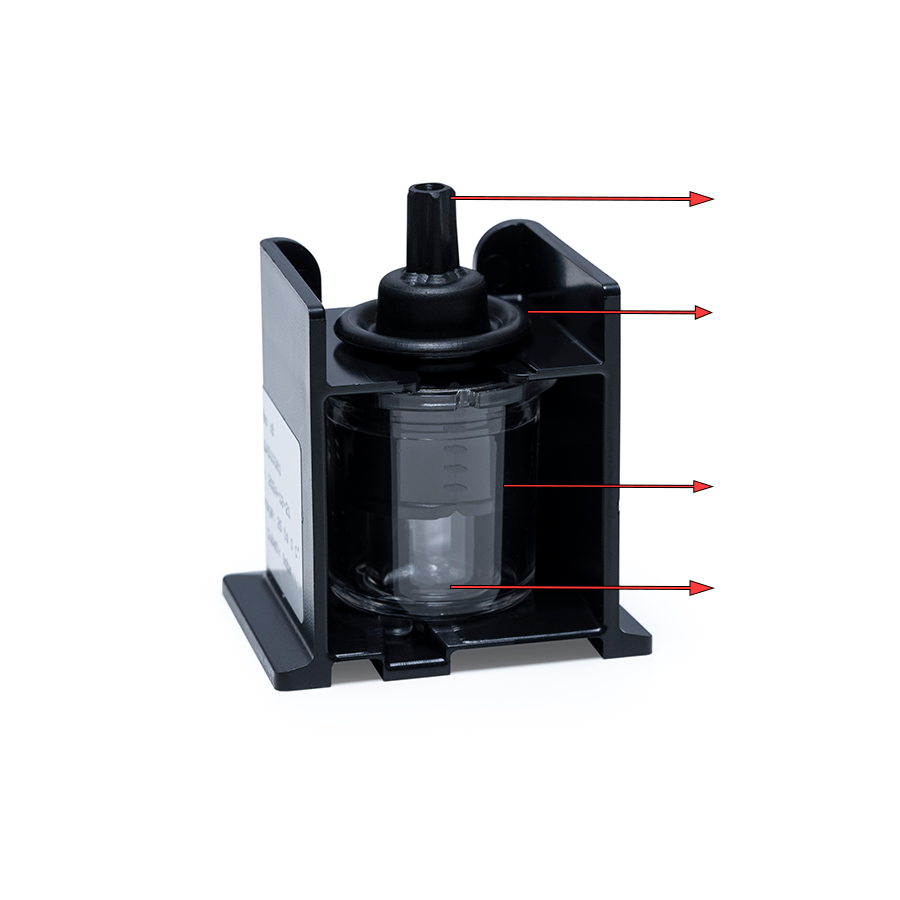
- Lid: The lid is used to seal the hybcell and to prevent cross-contamination.
- Tray: The tray holds the other components together and mechanically protects the hybcell.
- Core: The core is the heart of the hybcell and includes test-specific spots on its surface.
- Tube: This transparent cylinder holds the liquid sample. The core rotates within the tube (and therefore within the sample).
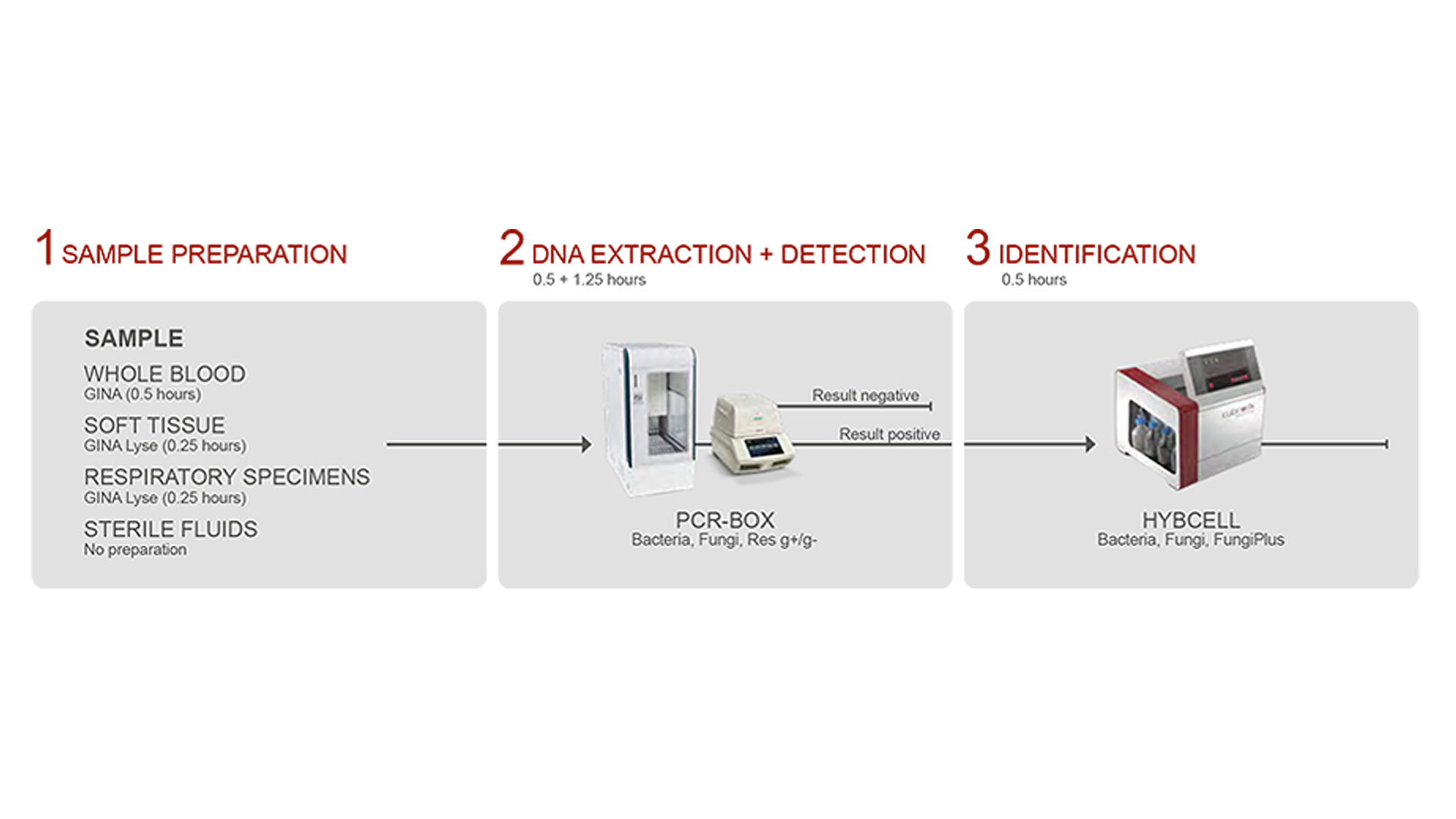
By eliminating the need for upfront culture growth, the system delivers comprehensive pathogen identification and genetic resistance screening directly from raw clinical matrices in under 3 hours. This rapid, direct-from-sample testing allows hospitals to safely transition patients from broad-spectrum empirical treatments to narrow-spectrum targeted therapies on day one.
Departmental Workflows & Diagnostic Capabilities
The platform operates as a versatile, multi-application system designed to meet the distinct operational and clinical requirements of different hospital environments. Select a department below to explore detailed panel profiles, validation data, and automated instrument workflows:
- Clinical & Molecular Microbiology
- Emergency Medicine & Intensive Care
- Blood Sciences & Core Laboratory Automation
Explore culture-independent syndromic multiplexing, including the FungiPlus panel for 65 fungal species, and learn how compact sequencing resolves complex mixed infections without fast-grower bias.
Review urgent sepsis workflows, rapid 2-hour hemoculture confirmation using the extraction-free LINA protocol, and immediate resistance gene profiling for critical care settings.
Examine the standardized 4-step automated routine on the hyborg Dx RED platform, LIMS connectivity configurations, and maintenance-free design metrics for core laboratories.